
Introduction
Strong families often share open and honest conversations. However, sometimes misunderstandings or stress can make talking hard. That is where communication therapy strengthens family relationships. This therapy helps families talk better, listen more, and solve problems together. As a result, many families feel closer and happier. In this blog, you will learn how communication therapy can help your family grow stronger.
What is Communication Therapy?
Communication therapy is a type of counseling. It teaches people how to talk and listen in healthy ways. Often, therapists work with families to help everyone share their thoughts and feelings. For example, a therapist may guide a family through tough talks or help them understand each other better. This therapy is used in physical medicine and rehabilitation, especially when health issues affect how people talk or connect.
How Communication Therapy Works in Families
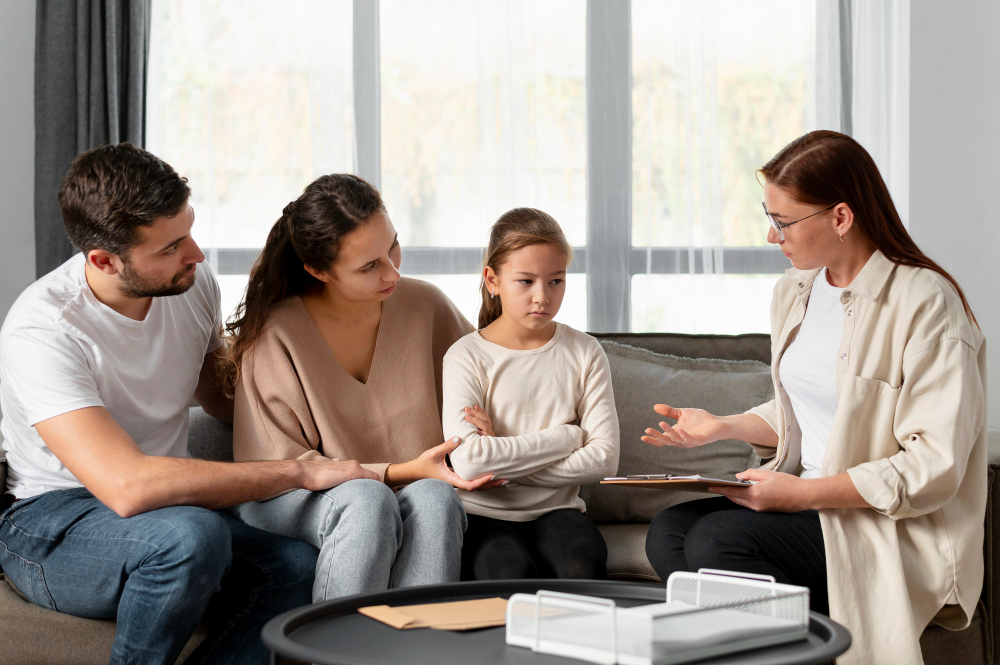
First, a therapist meets with the family to learn about their needs. Then, the therapist helps each person express themselves. Sometimes, families practice new ways to talk during sessions. In addition, therapists teach families how to listen and respond kindly. Over time, these skills help families solve problems and avoid fights. Therefore, communication therapy for families can make home life calmer and more supportive.
Key Benefits for Family Relationships
Communication therapy strengthens family relationships in many ways. Here are some key benefits:
Because of these benefits, many families feel more connected after therapy. In fact, research from the World Health Organization shows that strong family communication leads to better mental health.
Common Techniques Used in Communication Therapy
Therapists use many helpful tools in family communication therapy. Some common techniques include:
For example, a therapist might ask each person to repeat what they heard before responding. This helps everyone feel heard and valued.
Real-Life Examples or Case Studies
Let’s look at a fictional example. The Patel family often argued at dinner. No one felt listened to, and everyone got upset. After starting communication therapy, they learned to take turns speaking and listening. Soon, their meals became more peaceful. Another family, the Browns, used therapy to help their child with speech delays. As a result, they found new ways to support and encourage each other every day.
How to Access Communication Therapy
Many cities offer communication therapy services for families. You can find therapists in hospitals, clinics, or private offices. In some places, schools or community centers also provide help. To start, ask your doctor for a referral or search online for “communication therapy services in [your city].” Make sure to choose a licensed therapist with experience in family therapy.
Tips for Families Considering Communication Therapy
If you are thinking about therapy, here are some tips:
Remember, every family is different. What works for one may not work for another. However, most families see progress when they stick with therapy.
Prevention and Long-Term Relationship Health
Even if your family is doing well, communication therapy can help prevent future problems. By learning healthy ways to talk and listen, families can handle stress better. Over time, these skills support long-term happiness and strong bonds. In summary, improving family relationships through therapy is a smart step for lasting health and harmony.
For more information, consult a qualified therapist to explore how communication therapy can benefit your family.