
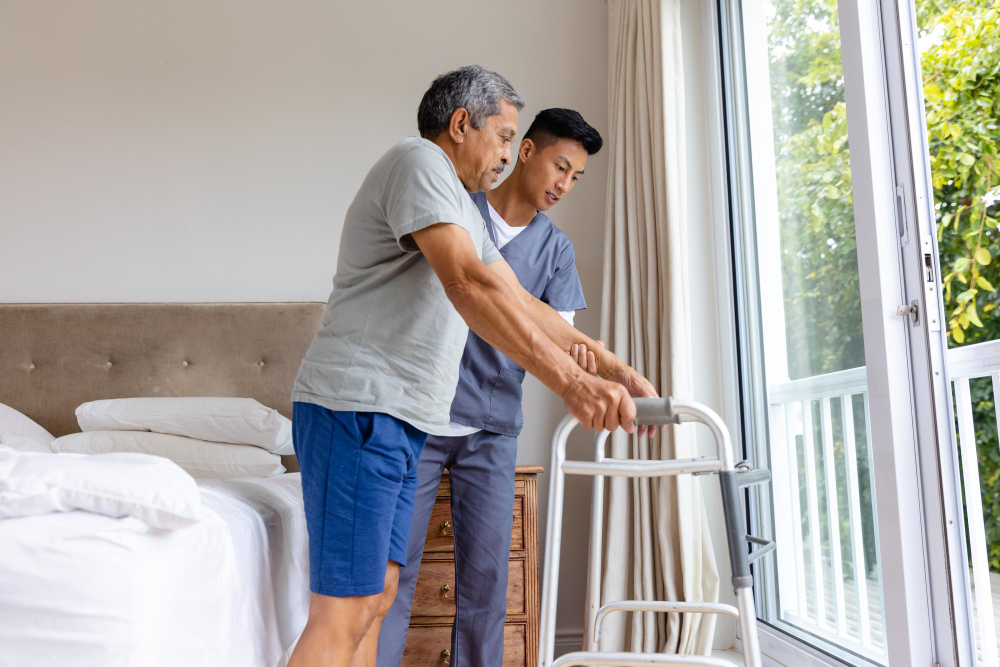
Introduction to Bed Mobility Training for Dependent Elderly Patients
Bed mobility training for dependent elderly patients is very important. Many seniors need help moving in bed due to weakness or illness. Because of this, they may struggle to turn, sit up, or change positions. Bed mobility training teaches safe ways to move and helps caregivers support their loved ones. As a result, it can prevent injuries and improve comfort. According to the World Health Organization, proper movement in bed reduces the risk of pressure sores and other problems.
Common Challenges in Bed Mobility for Dependent Elderly Patients
Many elderly patients face challenges with bed mobility. For example, weak muscles, joint pain, or medical conditions can make movement hard. In addition, fear of falling may cause anxiety. Some common challenges include:
Because of these challenges, many seniors need extra support and training.
Step-by-Step Bed Mobility Training Techniques
With the right techniques, caregivers can help elderly patients move safely in bed. Here are some simple steps and tips:
Always encourage the patient to help as much as possible. Even small movements can build strength over time.
Safety Precautions and Caregiver Guidance
Safety is very important during bed mobility training. Therefore, caregivers should follow these tips:
Because safety comes first, never rush the process. If you feel unsure, ask for help from a healthcare professional.
Benefits of Proper Bed Mobility Training
Proper bed mobility training offers many benefits for elderly patients. For instance, it can:
Because of these benefits, regular training can greatly improve quality of life for dependent seniors.
Prevention of Complications
Without proper movement, elderly patients may face serious problems. For example, pressure sores, muscle stiffness, and joint pain can develop. To prevent these complications:
Because prevention is easier than treatment, regular checks and movement are key.
When to Consult a Physiotherapist or Rehabilitation Specialist
Sometimes, extra help is needed. If the patient has severe weakness, pain, or new problems, consult a physiotherapist or rehabilitation specialist. These experts can:
Because every patient is different, professional advice ensures the best care and safety.
Conclusion
In summary, bed mobility training for dependent elderly patients is vital for comfort and health. With the right techniques and safety tips, caregivers can make a big difference. For personalized support, consult a physiotherapist or rehabilitation specialist.